


Just brought home a tiny ball of fur? Congratulations!
Those first few weeks with a new kitten are magical—but let’s be real, they can also be a little overwhelming. What do they actually need? Is that midnight zoomie session normal? (Spoiler: yes.)
Here’s your quick-start guide to raising a happy, healthy kitten—without the stress.

1. Kitten-Proof Your Home First
Before you bring them home, get down on your hands and knees and see the world from their eyes.
Quick checklist:
Hide electrical cords (they love to chew)
Remove toxic plants (lilies are DEADLY to cats)
Secure windows and balconies
Close toilet lids (small kittens can fall in)
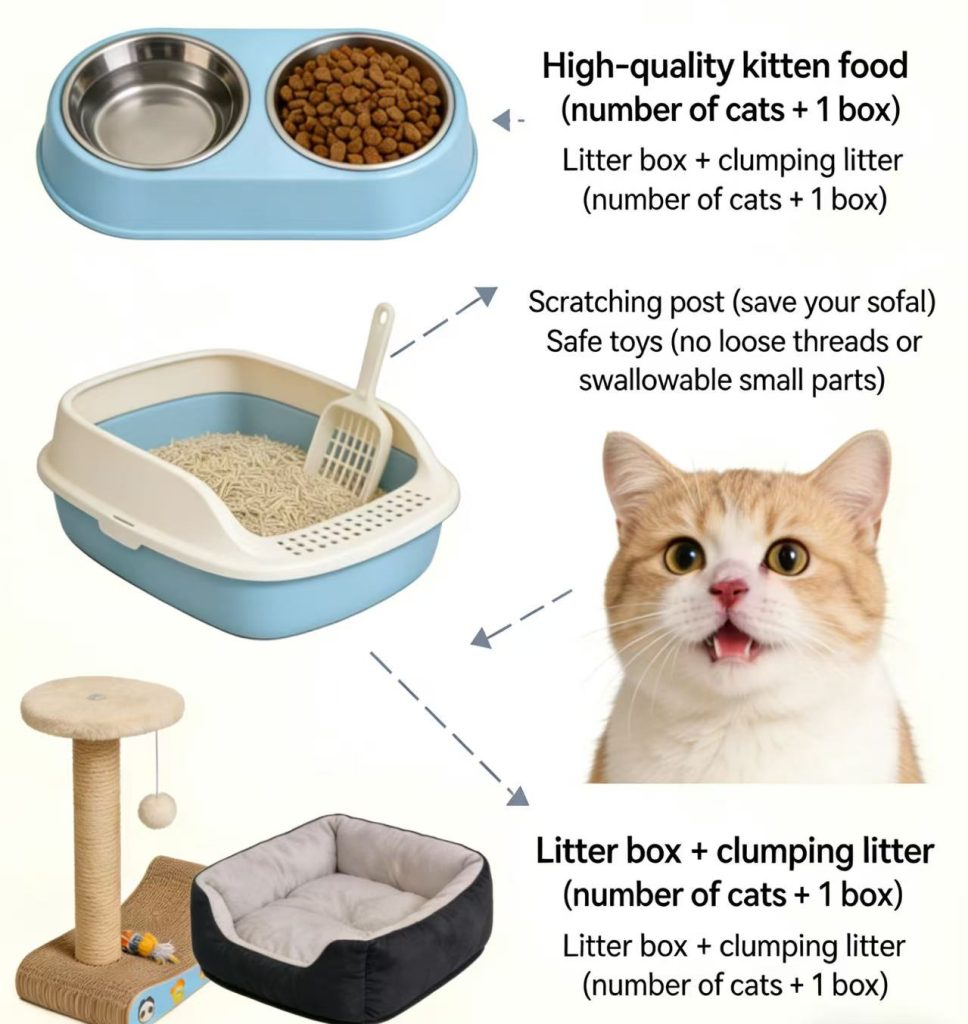
2. The “Welcome Kit” Essentials
You don’t need to break the bank, but these are non-negotiable:
Food & water bowls (ceramic or stainless steel—plastic causes “cat acne”)
High-quality kitten food (not adult cat food!)
Litter box + clumping litter (one box per cat, plus one extra)
Scratching post (save your sofa!)
Safe toys (no strings or small parts they can swallow)
Cozy bed (though they’ll probably sleep on your laundry)
3. The First 24 Hours: Let Them Come to You
The biggest mistake new owners make? Smothering them with love.
Instead, set up a “safe room”—a small, quiet space with their food, litter box, and bed. Let them explore at their own pace. Sit on the floor, talk softly, and let them approach YOU. Building trust now = confident cat later.
4. Litter Box 101 (This is IMPORTANT)
Good news: most kittens already know how to use a litter box. Your job is to keep it appealing.
The golden rules:
Scoop daily. Seriously. They hate dirty bathrooms as much as you do.
Place it in a quiet spot—not next to their food
Use unscented litter (cats hate strong perfumes)
If they have an accident, clean with enzymatic cleaner. Never punish—they won’t understand why.
5. What (and When) to Feed
Kittens have tiny stomachs and high energy needs.
0-6 months: Feed 3-4 times daily
6+ months: Twice daily is fine
Wet food + dry food: Wet food helps with hydration; dry food helps with dental health. A mix is ideal.
Never feed: onions, garlic, chocolate, grapes, or xylitol (artificial sweetener).
6. Play = Bonding + Exercise
Those midnight zoomies? Totally normal. Kittens are crepuscular—most active at dawn and dusk.
Play smart:
Use wand toys (let them “catch” it—satisfies hunting instincts)
Never use hands as toys (teaches them biting is okay)
15-20 minutes of play before bed = fewer 3 AM wake-up calls
7. When to Call the Vet
Kittens hide illness well. Watch for these red flags:
🚩 Lethargy (sleeping more than usual)
🚩 Vomiting or diarrhea for more than 24 hours
🚩 Not eating for 12+ hours
🚩 Sneezing, coughing, or eye discharge
🚩 Straining in the litter box (could be urinary blockage—emergency!)
First vet visit: Within the first week. They’ll check for parasites, start vaccinations, and discuss spaying/neutering.
8. Understanding Cat Behavior (Decoded!)
Kneading (making biscuits): They feel safe and happy. Hold still and enjoy.
Slow blinking: They’re giving you a “cat kiss.” Slow-blink back!
Head-butting: Marking you as “theirs.” It’s a huge compliment.
Purring: Usually means happy, but can also mean stressed. Check body language
Raising a kitten is a journey. You’ll make mistakes. You’ll lose some sleep. But that tiny creature will fill your home with purrs, chaos, and more love than you imagined possible.
Be patient. Be present. And take lots of photos—they grow up fast.
Please read separately: