


Putting dry ice in a household freezer creates a hidden dry ice explosion risk that many people overlook. As solid CO₂ sublimates into gas, the sealed, airtight design of a freezer traps this expanding gas, building pressure that can eventually lead to dangerous ruptures or even explosions. Understanding this dry ice explosion hazard is critical to handling dry ice safely at home or work.

What Is Dry Ice?
Dry ice is the solid form of carbon dioxide (CO₂). Unlike regular ice, it does not melt into liquid. Instead, it undergoes a process called sublimation, where it turns directly from a solid into gas.
This unique property is what makes dry ice useful—but also potentially hazardous.
Why Dry Ice Explosion Happens in Freezers
1. Rapid Gas Expansion in a Confined Space
When dry ice sublimates, it releases large amounts of carbon dioxide gas. In an enclosed environment like a freezer:
- The gas has nowhere to escape
- Pressure builds up quickly
- The sealed space turns into a potential pressure chamber
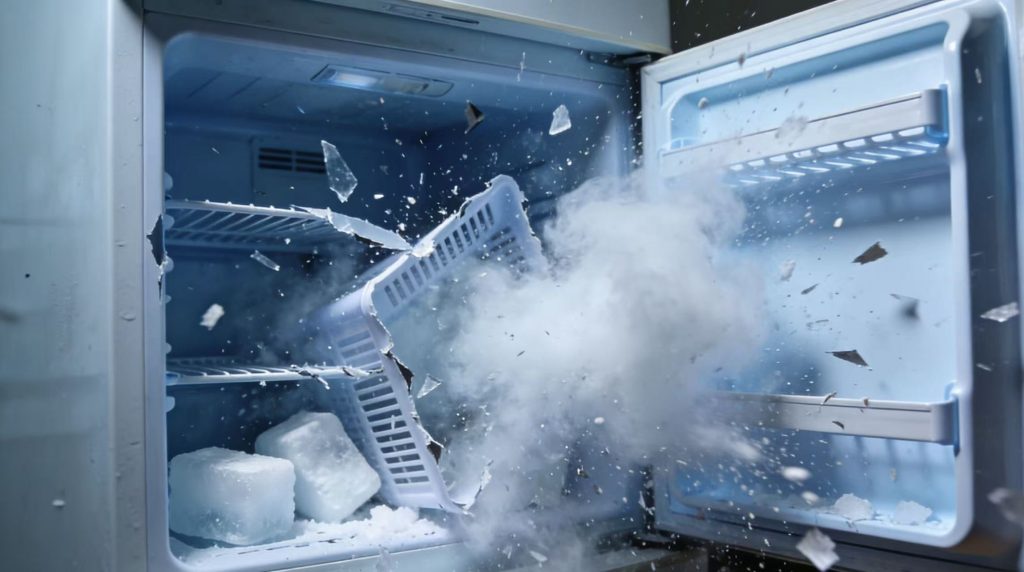
A dry ice explosion occurs when pressure from CO₂ gas exceeds the structural limits of the appliance.
2. Freezers Are Airtight by Design
Modern refrigerators and freezers are built to:
- Maintain consistent internal temperatures
- Prevent air exchange with the outside
This airtight design, while great for food preservation, becomes dangerous when dry ice is introduced. The CO₂ gas accumulates rapidly, creating internal pressure that the appliance is not designed to handle.
3. Temperature Differences Speed Up Sublimation
Although freezers are cold, they are not cold enough to keep dry ice stable indefinitely:
- Dry ice temperature: about -78.5°C (-109.3°F)
- Typical freezer temperature: around -18°C (0°F)
This temperature gap causes dry ice to continue sublimating—even inside the freezer—producing gas continuously.
4. Risk of Damaging the Appliance
Even before an explosion occurs, dry ice can:
- Damage internal components
- Crack plastic compartments
- Affect temperature sensors
In some cases, users have reported freezer doors popping open or seals failing due to pressure buildup.
How to Prevent Dry Ice Explosion at Home
To avoid danger, always follow these safety guidelines:
- Use a ventilated container: A loosely covered cooler is ideal
- Never seal it tightly: Gas must be able to escape
- Keep it in a well-ventilated area: Prevent CO₂ buildup
- Handle with gloves: Avoid frostbite
Dry ice is incredibly useful, but it must be handled with care. Placing it in a freezer might seem logical, but it actually creates the perfect conditions for pressure buildup and potential explosion.
Understanding the science behind dry ice can help you use it safely—and avoid turning a simple cooling tool into a serious hazard.
You may also read:
Methanol Market Turmoil: Causes of Price Surge and Future Outlook