
BARCELONA / BEIJING — For the past two years, artificial intelligence has lived inside screens. It could mimic human thought but couldn’t touch the human world. In 2026, that is finally changing.
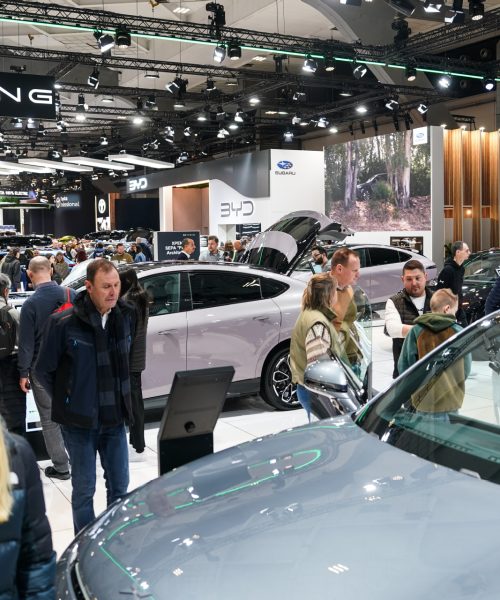
This week at the Mobile World Congress (MWC) 2026 in Barcelona, under the theme “The IQ Era,” a new kind of worker took center stage: “metal-collar” humanoid robots . The four-day exhibition, drawing nearly 100,000 participants from over 200 countries, showcased breakthroughs ranging from robot nurses to autonomous lunar rovers .
Industry leaders agree: 2026 is shaping up to be the “Year of Physical AI” — where AI systems don’t just understand language, but perceive, reason about, and act upon the physical world.
From “Brain” to “Body”
The AI industry is hitting a wall. Training costs for frontier models like GPT-5 are estimated to exceed $10 billion, while global high-quality text data is projected to dry up around 2026 . The path of simply scaling parameters is reaching its limits.
What comes next? According to the Beijing Academy of Artificial Intelligence (BAAI), the core evolution of AI is shifting from language learning to understanding and modeling the physical world — moving from “predicting the next word” to “predicting the next state of the world” .
Embodied intelligence — AI with a body — is the ultimate carrier of this capability. If large language models are the “brain,” robots are the “body.” Combined, AI can finally move from observing the world to changing it.
Why It Matters: 3 Key Global Trends
1. Mass Production Has Arrived
The era of prototypes is over. Multiple companies have entered stable mass-production stages in early 2026.
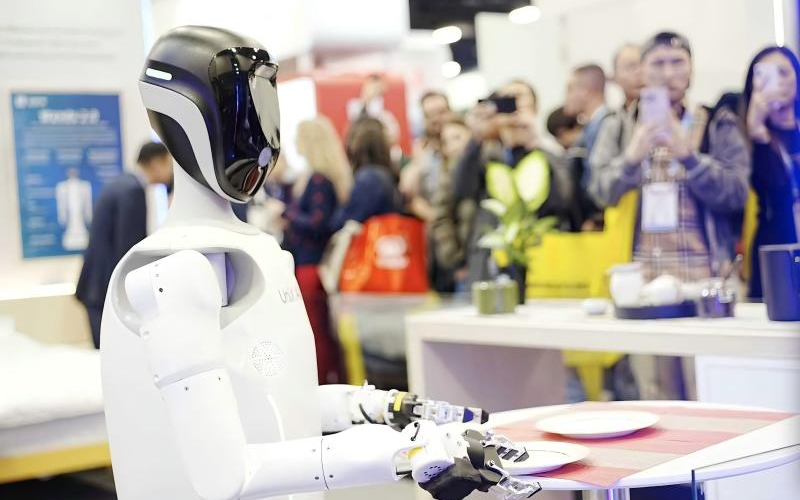
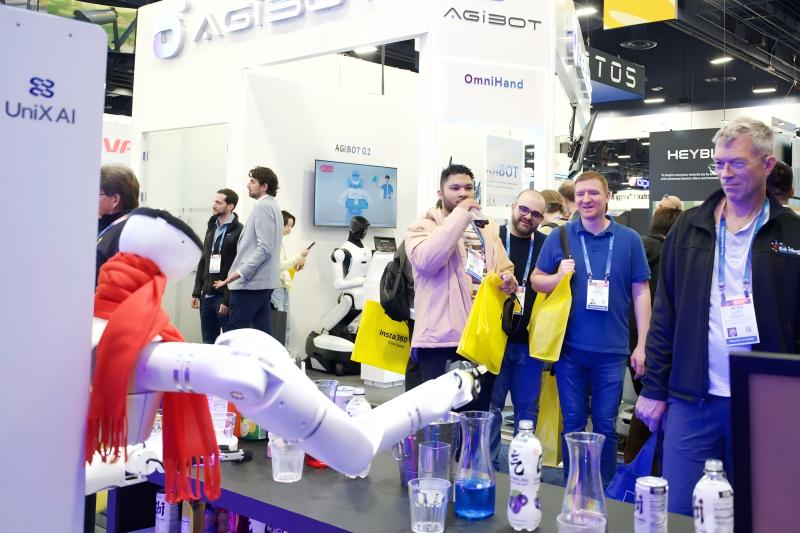
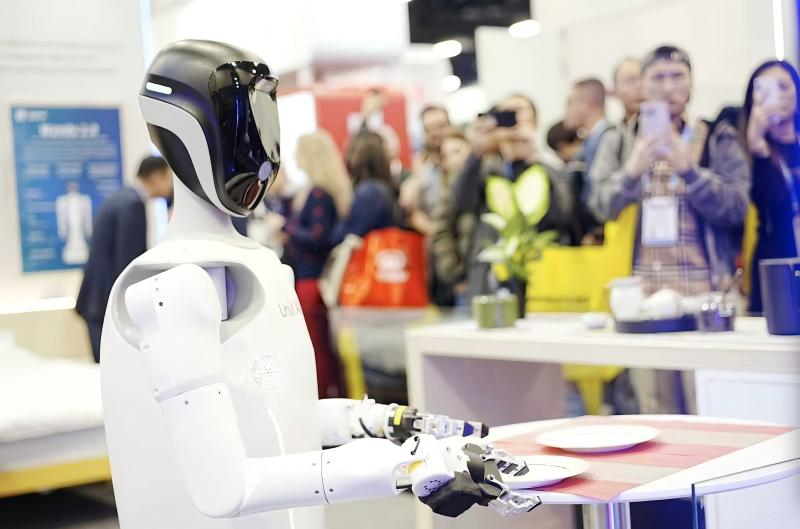
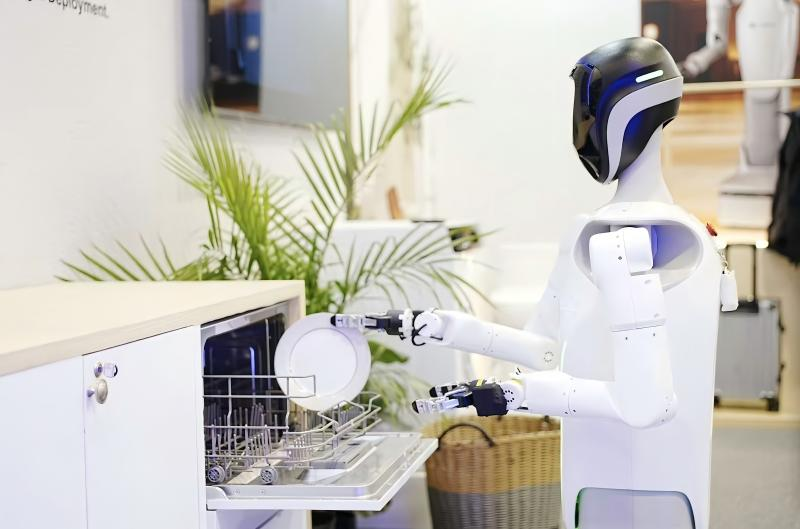
UniX AI, a Suzhou-based humanoid robotics company, made its official debut at CES 2026 in January, showcasing its Wanda 2.0 robot — a wheeled dual-arm humanoid that has already entered stable mass production . Hundreds of units have been delivered and deployed across hotels, property management, security, retail, and research environments .
The company has achieved a monthly delivery capacity exceeding 100 units, providing a strong operational foundation for commercial deployment . Visitors to its CES booth could watch the robot prepare drinks in real-time — a demonstration of both technical capability and user-friendly interaction .
Meanwhile, Boston Dynamics unveiled its next-generation, electric Atlas development model at CES 2026, which won CNET’s “Best Robot at CES” award . CNET praised Atlas’ “natural, humanlike walking ability and refined design,” noting it left a strong impression on the show floor . Hyundai Motor Group plans to deploy Atlas at its Metaplant America in Georgia starting in 2028, with expansion to global production sites by 2030 .
Apptronik, a University of Texas spinout building humanoid robots for Google DeepMind, announced in February that it has raised a total of $935 million in an expanded Series A, valuing the company at approximately $5.3 billion . The company is partnering with Google DeepMind, GXO, and Mercedes-Benz to deliver embodied AI for tasks like unloading trailers, picking warehouse inventory, and tending machinery .
Mobileye, the Intel subsidiary known for autonomous driving chips, acquired humanoid robot startup Mentee Robotics for $900 million in January, marking what co-founder Amnon Shashua calls “Mobileye 3.0” — a decisive step toward physical AI .
2. Real Results: ROI Is No Longer Theoretical
According to Forrester’s newly released report The State of Humanoid Robots, 2026, adoption is moving beyond experiments in some industries .
Key findings :
69% of automation decision-makers are adopting or planning to adopt humanoid robots
Companies report 40% reductions in processing errors when humanoid robots standardize repetitive workflows
20% decreases in labor costs in specific activities
Early deployments concentrated in manufacturing, logistics, healthcare, and customer service
Real-world examples :
BMW is using humanoid robots for ergonomically challenging assembly tasks
KEENON Robotics is helping restaurants cut labor costs by 20% through automated food preparation and cleaning
AgiBot’s A2-W reportedly handled 30% of warehouse material transport with zero errors
Forrester emphasizes that early use cases position humanoid robots as additions to existing teams, not direct substitutes — absorbing repetitive, hazardous, or physically demanding tasks while employees shift toward supervisory and customer-facing work .
3. China’s Supply Chain Dominance
According to research firm Omdia, China accounted for about 90% of global humanoid robot shipments in 2025 . Morgan Stanley projects that China’s humanoid sales will more than double to 28,000 units in 2026, indicating that China will continue to dominate this sector worldwide .
At the AW 2026 China Humanoid Conference in Seoul, industry analysts revealed that China’s humanoid sector now includes approximately 160 companies developing complete humanoid robots and over 600 core-component supply-chain companies .
“The fundamental advantage that China has is a nearly vertically integrated robotics value chain: from the rare earths and high-performance magnets to the physical components, and the batteries,” Zornitsa Todorova, head of thematic FICC research at Barclays, told CNBC .
Chinese companies are aiming to lower unit prices to around $1,000 in the long term, though current manufacturing costs remain in the $30,000–$150,000 range . By comparison, Morgan Stanley estimates the build cost of a Tesla Optimus-style humanoid at about $46,000 even with China’s supply chain strengths — significantly lower than the $131,000 estimate tied to non-Chinese components .
IDC predicts that the global smart robot hardware market will reach approximately $30 billion by 2026, with China leading the growth and exceeding $11 billion.
The Technology: What’s Powering the Shift
Forrester attributes recent progress to rapid advances in AI software and supporting infrastructure :
Generative AI and physical AI expanding robot capabilities
AI-native cloud platforms shortening development cycles
NVIDIA’s Isaac GR00T-Dreams reducing model development time from three months to 36 hours through synthetic motion generation
UniX AI’s integrated technology stack demonstrates the sophistication required :
UniFlex: High-efficiency imitation learning framework enabling rapid skill acquisition
UniCortex: Long-horizon planning system transforming commands into coordinated actions
UniTouch: Visual-tactile foundation model enabling delicate physical interaction
The result? Robots that can perform complex, multi-step workflows with minimal supervision — clearing a hotel dining room by identifying items, collecting plates, loading a dishwasher, and sorting waste, all as a fluid operation .
By end of 2026: Global smart robot hardware market nears $30B; China surpasses $11B
By 2027–2028: First mass deployments in automotive manufacturing (Hyundai’s Atlas in Georgia by 2028)
By 2030: Humanoid robots expand to complex assembly processes; global supply chains increasingly rely on Chinese components
The Bottom Line
The embodied AI revolution isn’t coming — it’s already here. From Barcelona’s Mobile World Congress to Las Vegas’ CES, from Chinese factories to American warehouses, 2026 is the year AI finally gets a body.
For businesses, the question is no longer “if” but “how fast” — and “how do we manage a workforce that now includes machines?”
For workers, the challenge is adapting to a world where repetitive tasks are automated — and focusing on uniquely human skills like creativity, emotional intelligence, and strategic oversight.
For investors, the hardware layer (semiconductors, components) and infrastructure layer (simulation, orchestration) may offer clearer opportunities than the crowded application layer.
Welcome to the age of embodied AI.
Sources: Reuters, IDC, Forrester, TechCrunch, Anadolu Ajansı, GlobeNewswire, Science and Technology Daily, CNBC, Barclays