
First aid for fainting is a vital skill that everyone should learn. Fainting and sudden unconsciousness can happen anytime, whether at home, at work, or in public places.
Understanding proper first aid for fainting allows you to respond quickly and effectively, reducing risks and potentially saving lives.
Many people still rely on outdated or incorrect methods, such as shaking the person, pinching the philtrum, or forcing them to drink water. These actions are not only ineffective but can also make the situation worse.
the correct first aid for fainting ensures that you provide safe and scientifically supported care during emergencies.
Understanding First Aid for Fainting: Stay Calm and Assess Quickly
When someone suddenly collapses, the first step in first aid for fainting is to remain calm. Panic can delay proper action and create unnecessary confusion.
Approach the person and quickly assess their condition. Gently tap their shoulders and call out loudly to check for responsiveness.
Look for any signs of movement, speech, or eye opening. At the same time, observe their chest to see if they are breathing normally.
This initial assessment should only take a few seconds but is crucial for determining the next steps in first aid for fainting.
How to Check Breathing in First Aid for Fainting
Checking breathing is one of the most important parts of first aid for fainting. Look closely at the chest for regular rise and fall. You can also listen for breathing sounds or feel airflow near the nose and mouth.
Normal breathing means the person still has a functioning airway and circulation. However, if breathing is absent or abnormal, immediate action is required.
Always combine breathing checks with observation of skin color and overall condition. Pale, bluish, or gray skin may indicate a serious problem.
First Aid for Fainting When the Person Is Unconscious but Breathing
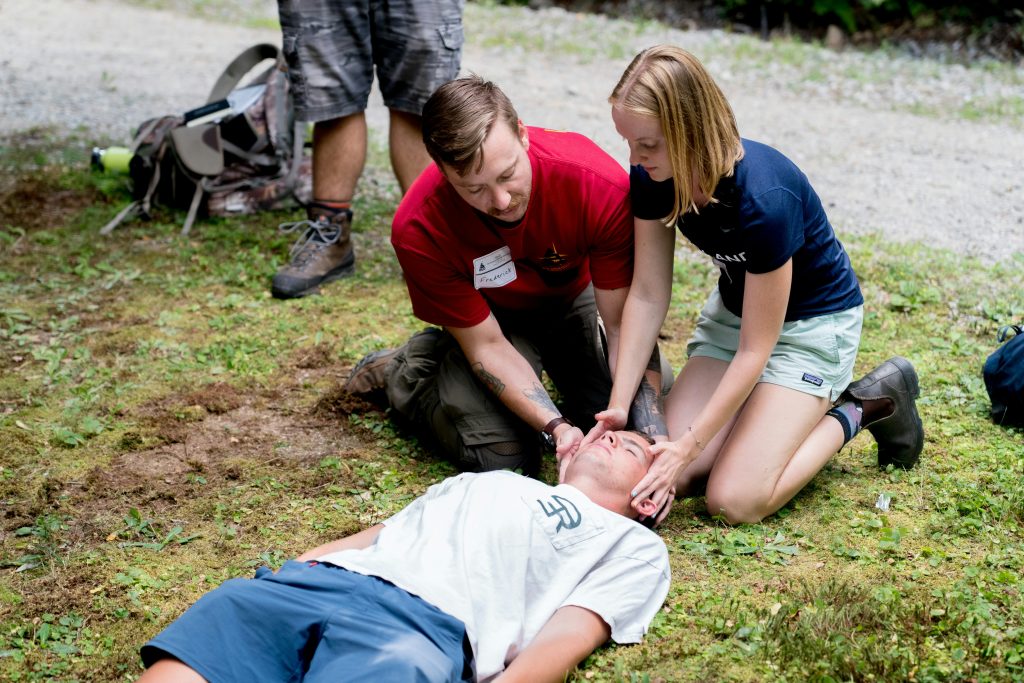
If the person is unconscious but still breathing, proper positioning is critical in first aid for fainting.
Carefully move the person to a safe, flat, and well-ventilated area. Loosen tight clothing such as collars, belts, or ties to ensure easier breathing. Avoid unnecessary movement, especially if injury is suspected.
The most important step is placing the person in the recovery position. Turn them onto their side with their head slightly tilted back. This position keeps the airway open and prevents choking if vomiting occurs.
Continue to monitor their breathing and consciousness while waiting for emergency help. Do not leave the person alone.
Recovery Position in First Aid for Fainting
The recovery position is a key technique in first aid for fainting. It is specifically designed to protect the airway.
When a person is unconscious, their tongue may fall backward and block the airway. In addition, vomiting can lead to aspiration. The side-lying position helps prevent both risks.
Make sure the head is tilted slightly back and the mouth is facing downward. This allows fluids to drain safely.
Emergency First Aid for Fainting Without Breathing or Pulse
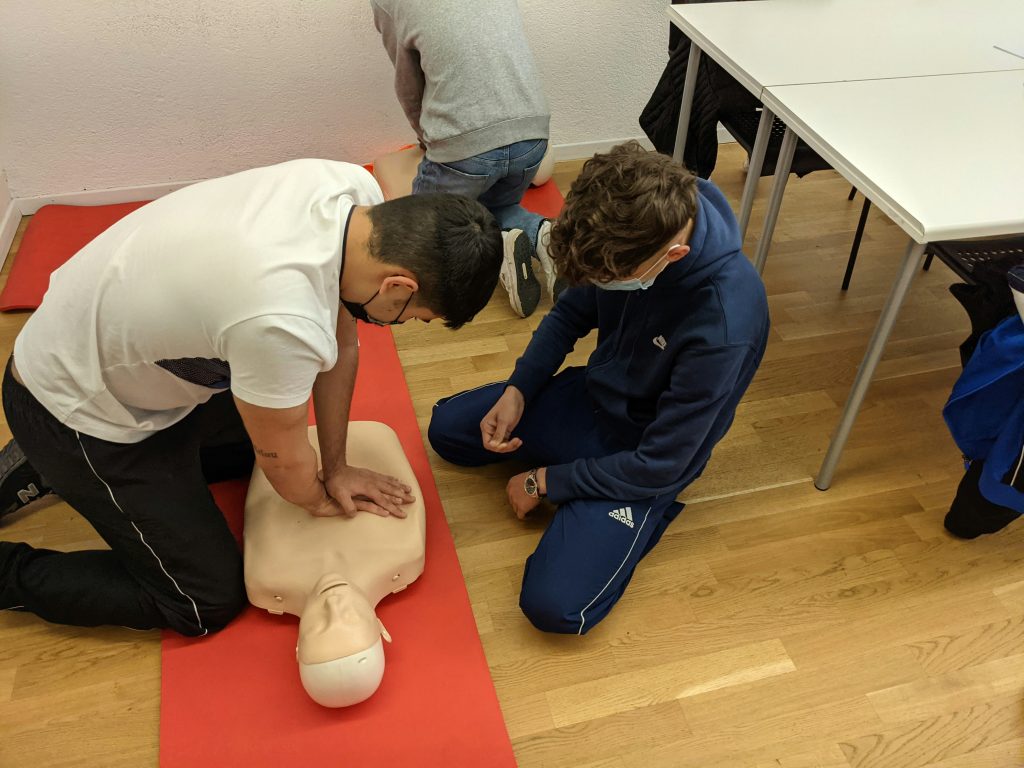
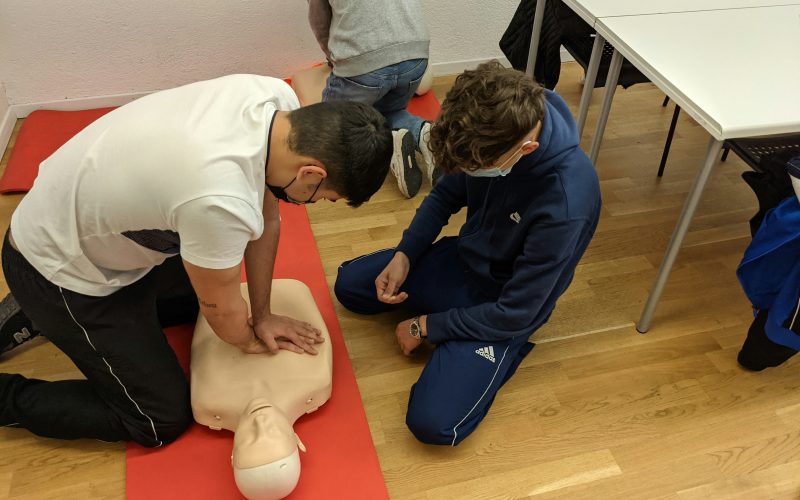
If the person is not breathing and has no pulse, this is a medical emergency requiring immediate first aid for fainting combined with CPR.
Start chest compressions right away. Place your hands on the center of the chest, on the lower half of the breastbone. Push hard and fast at a rate of 100 to 120 compressions per minute, with a depth of about 5 to 6 centimeters.
Allow the chest to fully recoil between compressions and minimize interruptions. Continuous compressions help maintain blood flow to the brain and heart.
At the same time, ask someone nearby to call emergency services. Early CPR significantly increases survival chances.
When to Call Emergency Services for Fainting
Calling for professional help is a critical part of first aid for fainting. You should call emergency services immediately if:
- The person does not regain consciousness quickly
- There is no breathing or pulse
- The fainting is accompanied by chest pain
- There are signs of stroke, such as facial drooping or slurred speech
- The person has a known heart condition
Never delay calling for help when the situation is unclear or serious.
Cause-Based First Aid for Fainting: What You Should Know
Different causes of fainting may require slightly different approaches in first aid for fainting.
If low blood sugar is suspected and the person regains full consciousness, you can give small amounts of sugar, such as candy, juice, or honey. This helps restore blood glucose levels quickly.
For heat-related fainting, move the person to a cool and shaded area. Help lower their body temperature gradually and provide fluids if they are fully conscious.
If fainting is caused by heart or brain conditions, avoid moving the person unnecessarily and wait for trained medical professionals.
First Aid for Fainting Myths: Why Pinching the Philtrum Is Wrong
A common misconception in first aid for fainting is that pinching the philtrum can wake a person up. In reality, this method is not recommended in modern first aid.
There is no scientific evidence supporting its effectiveness. Instead, it may cause unnecessary pain, stress, or even injury.
More importantly, it distracts from essential actions such as checking breathing, ensuring a clear airway, and calling for help. Proper first aid for fainting should always focus on evidence-based practices.
First Aid for Fainting: Critical Mistakes to Avoid
Avoiding mistakes is just as important as taking the correct steps in first aid for fainting.
Do not shake the person violently. This can cause injury or worsen their condition.
Do not force food, water, or medication into their mouth, especially if they are unconscious.
Do not allow large crowds to gather, as this can limit airflow and increase stress.
Do not move the person unnecessarily, especially if a neck or spinal injury is suspected.
Do not give alcohol, strong tea, or other stimulating substances.
Staying calm and following proper procedures is always the safest approach.
Conclusion: Mastering First Aid for Fainting Saves Lives
First aid for fainting is more than just a basic skill—it is a life-saving ability that everyone should develop. While fainting may seem minor, it can sometimes indicate serious underlying conditions.
By staying calm, assessing the situation quickly, and applying correct first aid for fainting techniques, you can prevent complications and protect the person’s life.
In emergencies, knowledge truly makes the difference. Learning and applying proper first aid for fainting ensures that you are ready to act when it matters most.