
The Heimlich maneuver for choking is one of the most important emergency skills everyone should learn.
Choking can happen suddenly while eating, laughing, crying, or even talking. When food or a foreign object blocks the airway, oxygen supply to the brain can be cut off within minutes. Without quick action, this situation can lead to unconsciousness or even death.
Understanding the Heimlich maneuver for choking can make the difference between life and death. This is especially critical for children and elderly individuals, who are at a higher risk of choking incidents.
In this guide, you will learn how to identify choking, when to act, and how to perform the Heimlich maneuver safely and effectively.
What Is Choking and Why Is It Dangerous?
Choking occurs when an object becomes lodged in the throat or airway, preventing normal breathing. This blockage can be partial or complete.
- Partial obstruction allows some airflow
- Complete obstruction blocks all airflow and is life-threatening
When the airway is fully blocked, the body cannot receive oxygen. Brain damage can begin within 4–6 minutes, making immediate action essential.
Common choking hazards include:
- Food (meat, nuts, grapes)
- Small objects
- Candy or jelly-like foods
- Toys (especially for children)
How to Recognize When the Heimlich Maneuver for Choking Is Needed
Not every choking situation requires immediate intervention. Knowing when to act is crucial.
Signs of Mild Choking (No Heimlich Needed Yet)
If the person:
- Can cough forcefully
- Can speak or make sounds
- Can breathe
Encourage them to keep coughing. Do not interfere unnecessarily.
Signs of Severe Choking (Immediate Action Required)
Perform the Heimlich maneuver for choking if the person shows:
- Inability to speak
- Inability to cough
- Difficulty or inability to breathe
- Bluish or pale skin
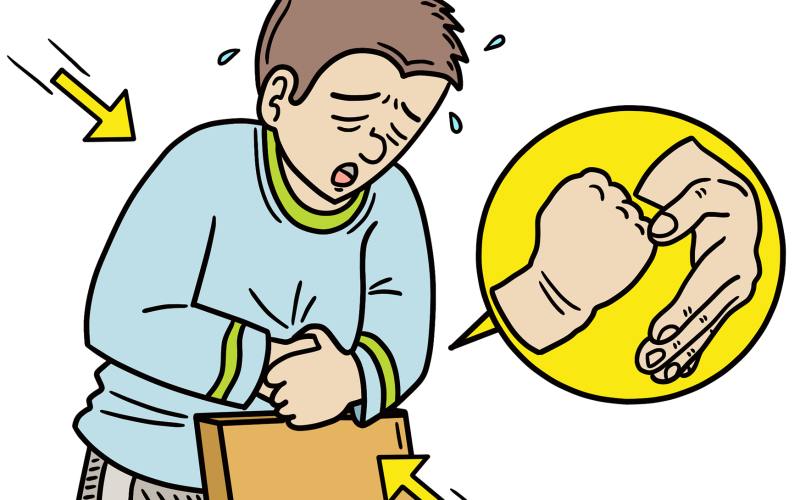
- Hands clutching the throat (universal choking sign)
- Panic or distress
- Loss of consciousness
These symptoms indicate a complete airway blockage, requiring urgent help.
Step-by-Step: Heimlich Maneuver for Adults and Children
Correct Positioning
- Stand behind the person
- Place your arms around their waist
- Keep your feet apart for balance
Performing the Heimlich Maneuver
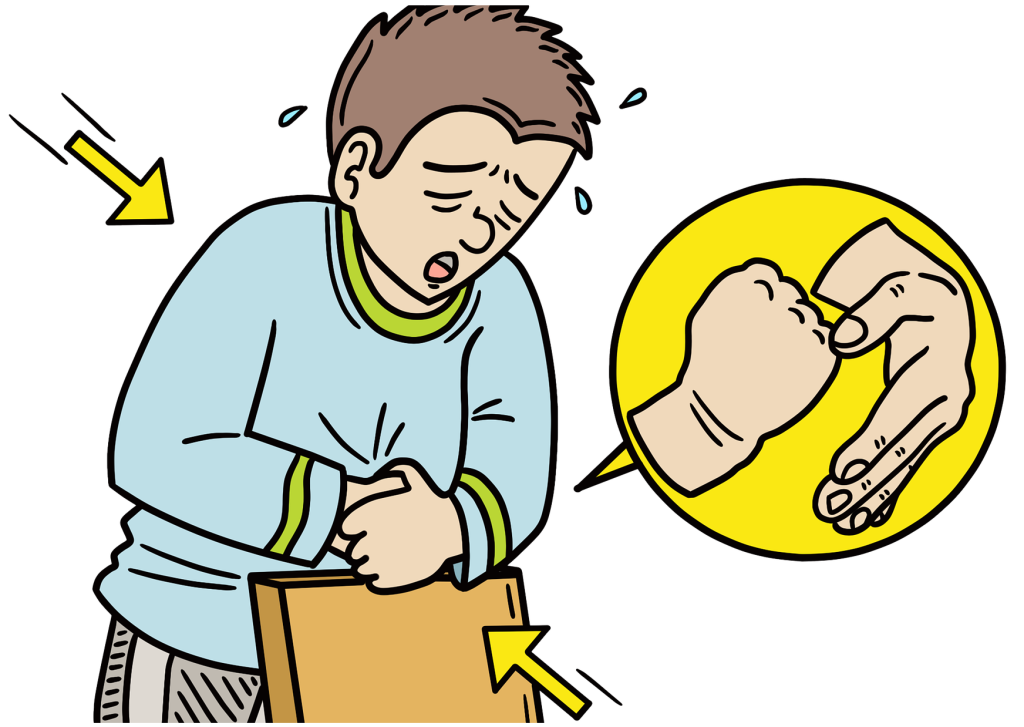
- Make a fist with one hand
- Place it above the navel and below the chest
- Grab your fist with the other hand
- Deliver quick, inward and upward thrusts
Each thrust should be:
- Fast
- Controlled
- Forceful but not excessive
Repeat until:
- The object is expelled
- The person can breathe again
Important Safety Tips
- Avoid excessive force (risk of injury)
- Do not press directly on ribs or chest
- Stay calm and focused
The Heimlich maneuver for choking should be performed quickly but carefully.
Heimlich Maneuver for Infants (Under 1 Year Old)
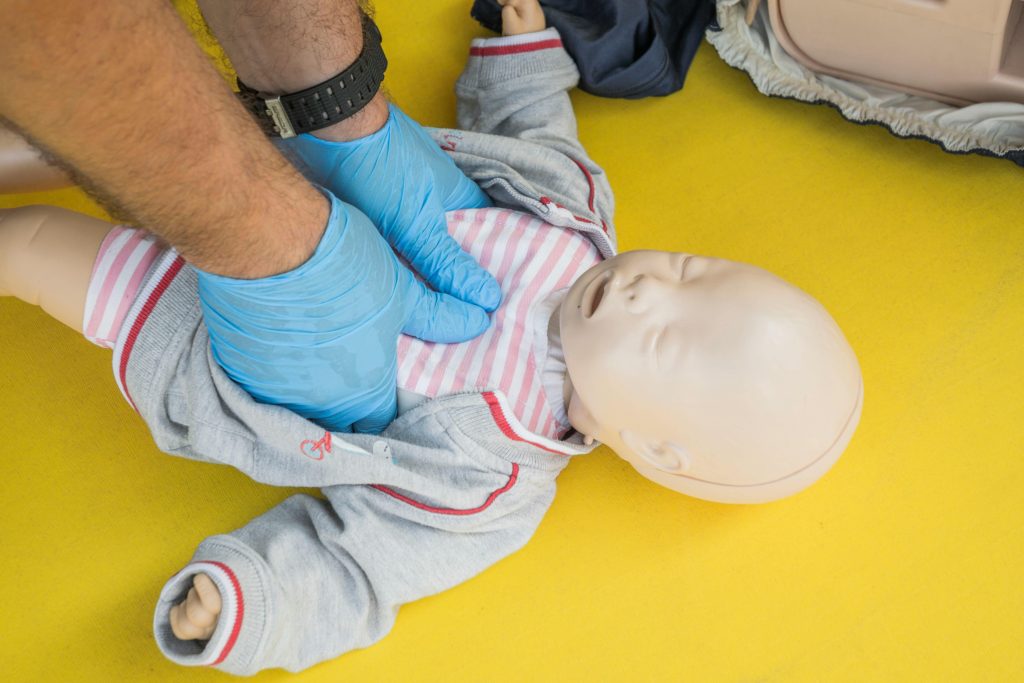
The standard Heimlich maneuver must not be used on infants.
Step 1: Back Blows
- Place the infant face down on your forearm
- Keep the head lower than the body
- Support the head and neck
- Deliver 5 firm back blows between the shoulder blades
Step 2: Chest Thrusts
- Turn the infant onto their back
- Keep the head lower than the body
- Use two fingers to press the center of the chest
- Perform 5 quick chest thrusts
Repeat the Cycle
Alternate:
- 5 back blows
- 5 chest thrusts
Continue until the airway is clear.
What If the Person Becomes Unconscious?
If the victim collapses:
- Call emergency services immediately
- Begin CPR (Cardiopulmonary Resuscitation)
- Check the airway before giving breaths
CPR helps maintain blood flow and oxygen supply until help arrives.
Common Mistakes When Performing the Heimlich Maneuver for Choking
Avoid these dangerous mistakes:
- Slapping the back randomly
- Using too much force
- Performing the maneuver too early
- Incorrect hand placement
- Not calling emergency services when needed
Proper technique is essential for effectiveness and safety.
Prevention: How to Avoid Choking Emergencies
Prevention is always better than emergency treatment.
Safe Eating Habits
- Chew food slowly and thoroughly
- Avoid talking or laughing while eating
- Cut food into small pieces
Child Safety Tips
- Do not allow children to eat while running or crying
- Keep small objects out of reach
- Avoid high-risk foods (nuts, grapes, jelly)
Elderly Care
- Be cautious with dentures
- Eat slowly
- Avoid dry or hard foods
Why Everyone Should Learn the Heimlich Maneuver for Choking
The Heimlich maneuver for choking is simple, effective, and easy to learn. Yet, many people hesitate in emergencies because they lack confidence or knowledge.
Learning this technique means:
- You can save a life
- You can act quickly in emergencies
- You can protect your family and others
Emergencies happen without warning. Being prepared is the best defense.
Conclusion: A Simple Skill That Saves Lives
Choking is a serious and potentially fatal emergency, but it is also highly treatable with the right knowledge. The Heimlich maneuver for choking is a proven life-saving technique that anyone can learn.
By understanding the signs of choking, knowing when to act, and applying the correct steps, you can turn a life-threatening situation into a survivable one. Take the time to learn and remember this essential skill—it may one day save a life.